Café Culture at work: the work/latte balance
The way we work has changed dramatically in recent years, but one thing remains constant: our love for coffee. More than just a caffeine fix, coffee plays a central role in workplace culture, fostering collaboration, boosting productivity, and creating social moments that bring teams together. As offices evolve to compete with the comforts of home and the appeal of hospitality spaces, great coffee – and the environment it’s served in – has never been more important.
Britain’s coffee habits
Well, it’s enough to keep you awake at night: in fact according to the British Coffee Association, we drink 98 million cups of coffee a day. That’s a lot of washing up.
We’re a nation fuelled by coffee. Coffee and dogs, that’s our thing. Research from The Independent found that 65% of coffee was drunk at home, 25% at work or while studying, and the rest in shops, bars, and restaurants. However, remote and hybrid working now means people now expect their workplace to match the quality of their favourite coffee shop – if not surpass it. Workspaces are shifting towards a hospitality-inspired experience, blending comfort, service, and aesthetics to make coming into the office genuinely enticing.
It’s not just about the caffeine – it’s about the culture.
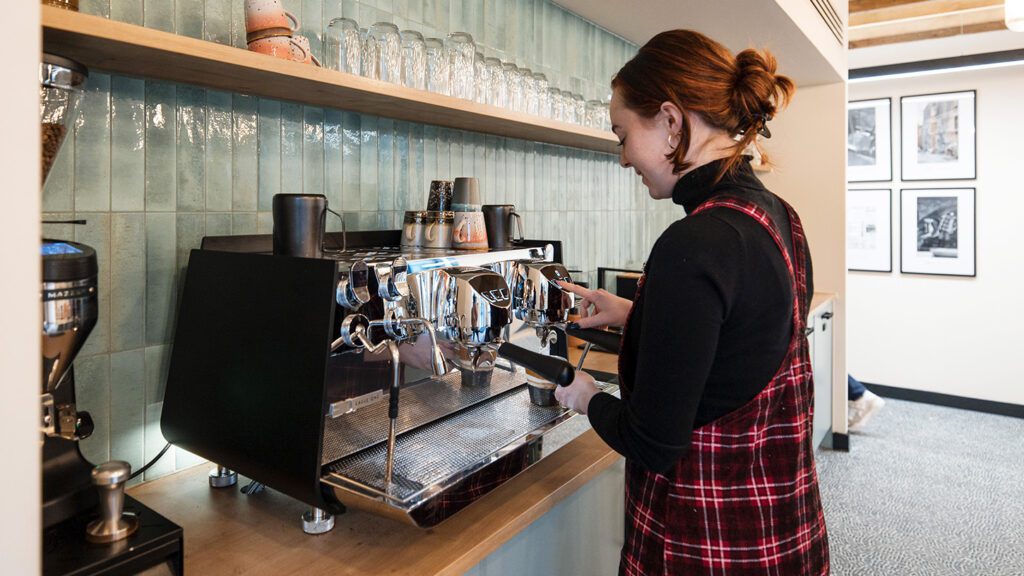
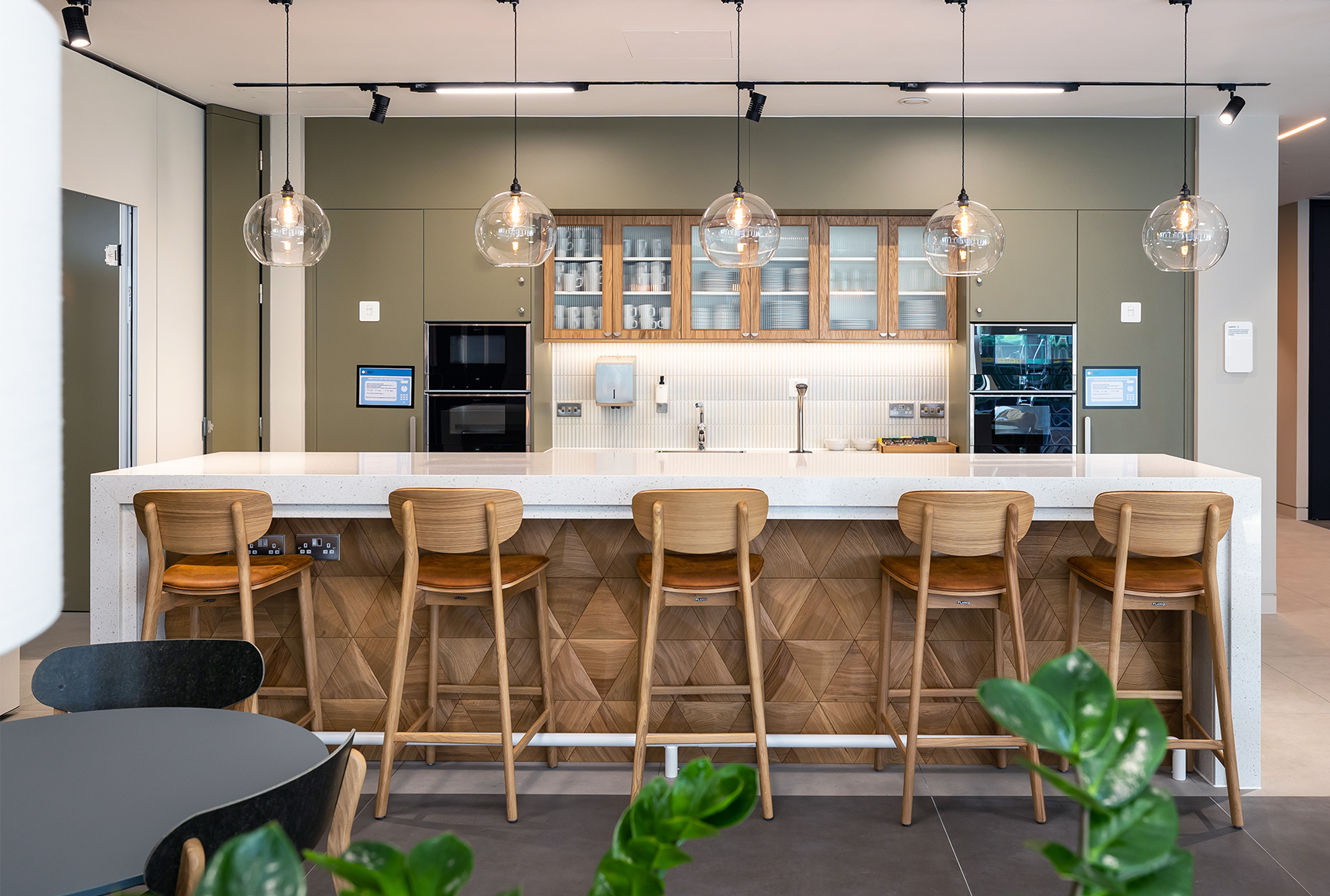
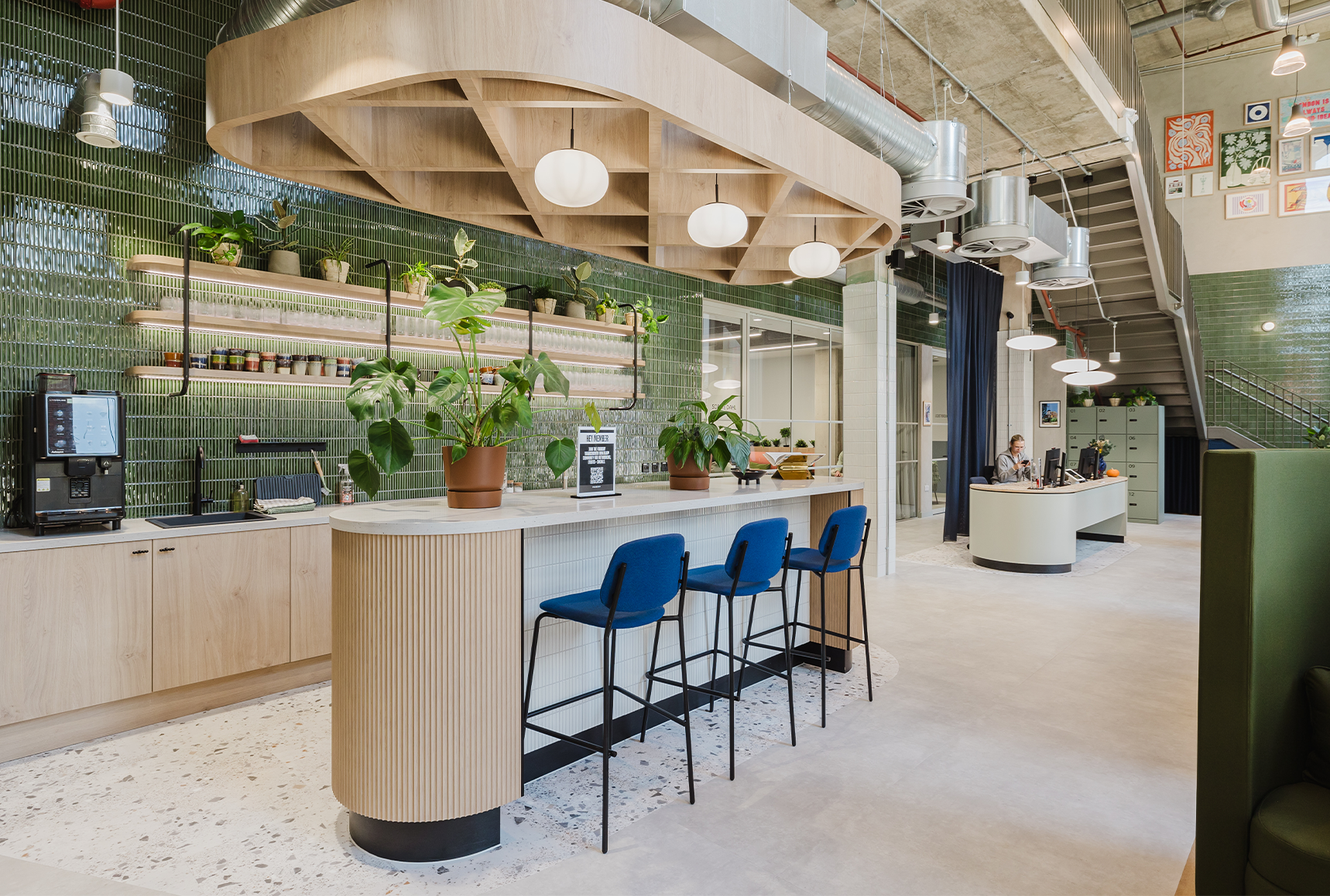
Many of our workspace designs centre around social tea and coffee points, often styled with a laid-back, boutique café aesthetic. Why? Because people are craving more than just a desk – they want a workspace that offers something beyond home comforts and rivals the best hospitality venues. Providing high-quality coffee in a beautifully designed setting encourages people to gather, chat, and build connections.
There was a time when smokers were considered the best-connected people in an organisation – stepping outside for a cigarette meant informal conversations that built relationships beyond hierarchy or department. Now, the power of networking has shifted to the coffee drinkers. Those regular trips to the coffee machine aren’t just about getting a caffeine fix; they create moments of spontaneous interaction that strengthen workplace culture. These casual encounters have a big impact, fostering collaboration, breaking down silos, and contributing to more engaged and productive teams.
In fact, tea points have become the modern-day watercooler, with studies showing that well-designed communal spaces can boost organisational productivity by up to 10%.
Yes, this coffee is making me more efficient actually
Does caffeine really help you stay focused and concentrate better? In short: yes. There’s a chemical called adenosine that builds up in the brain and induces feelings of sleepiness. As caffeine is a stimulant, it blocks the effect of adenosine and helps you feel more alert – and do better work.
And it’s not just a performance boost; a survey by Staples found that coffee makes 82% of workers feel happier.
Designing coffee into the workplace
The best office coffee experience depends on more than beans and machines. Thoughtful workplace design plays a key role. From flexible seating and biophilic touches to boutique café aesthetics, coffee points support collaboration, wellbeing, and employee satisfaction – but only when designed well.
There are a few key principles we follow when designing coffee lounges and teapoints:
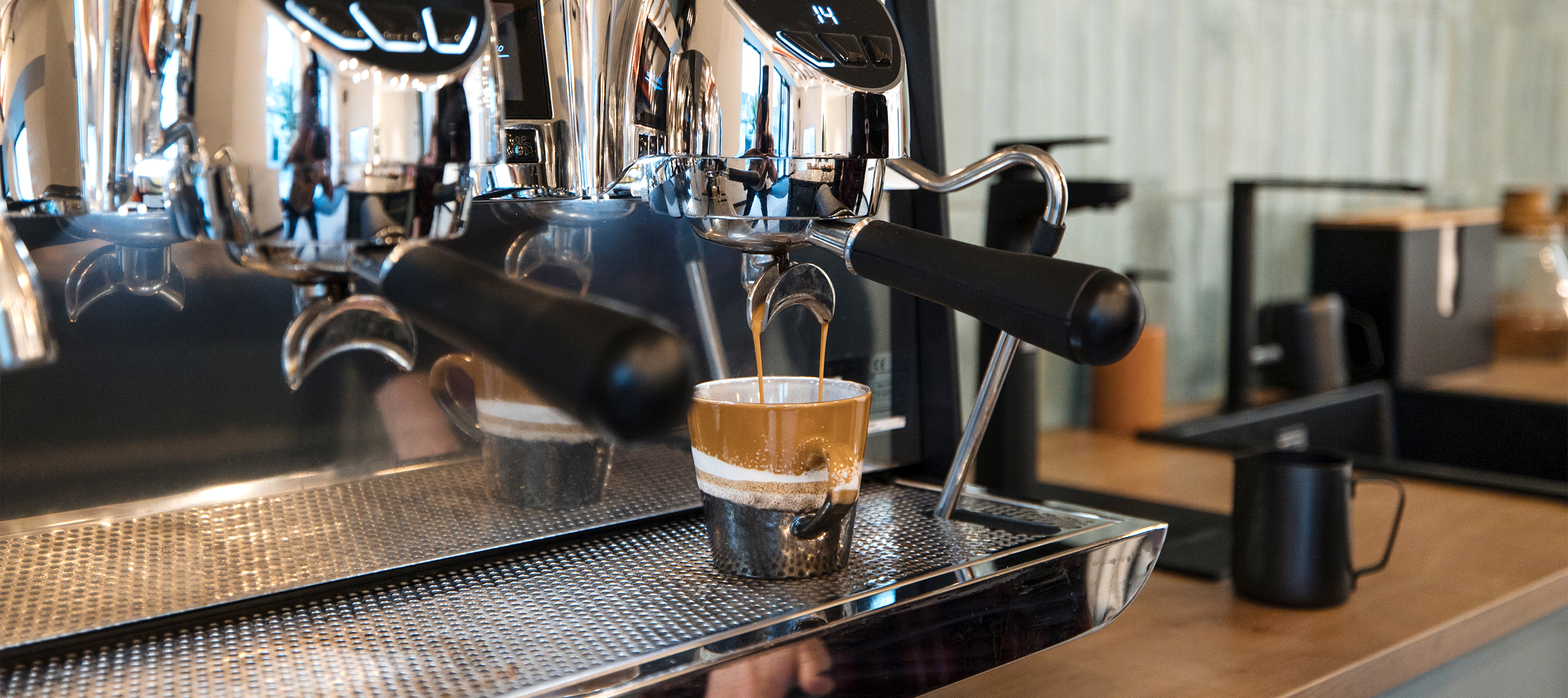
- Hospitality-inspired details – gone are the days of mismatched collection of cracked mugs (including the infamous Sports Direct mug). Instead, boutique café-style counters, artisanal coffee machines, and attractive crockery make the experience feel special.
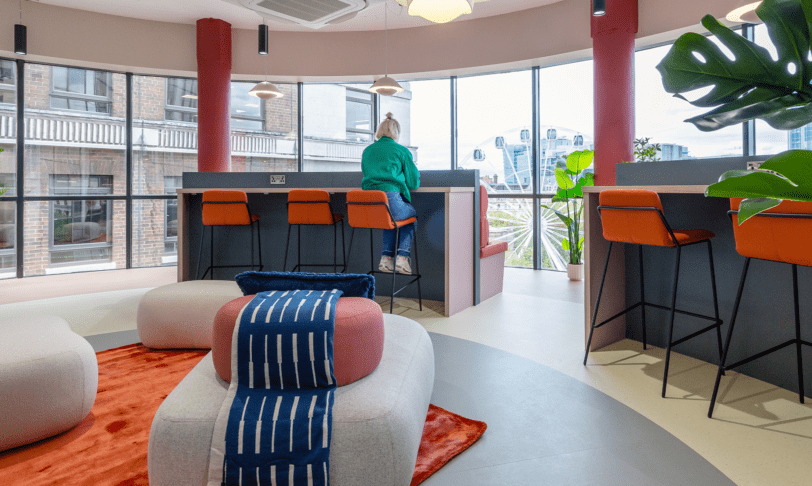
- Think social first – include seating that encourages conversation, such as small clusters of chairs or banquette seating around tables. Avoid rows of bar stools that feel like a queue.
- Flexible layouts – mix standing and sitting areas to accommodate quick chats, solo focus, or small group meetings.
- Blend aesthetics with function – high-quality finishes, natural light, and greenery make spaces feel welcoming, while practical touches like accessible power sockets and spill-proof surfaces keep them usable.


Final thoughts
For landlords, developers, and business leaders, hospitality-inspired coffee points act as a strategic tool – improving employee engagement, creating memorable experiences, and making spaces attractive to tenants and teams alike.
In our own office, The Quarter, our coffee lounge is the social heart of the office, complete with a barista-grade coffee machine.
Coffee might be the start, but the environment it sits in shapes the culture. Offices that combine great beverages with thoughtful design create workplaces employees want to be in and companies proud to show off.
Want to explore how your office can blend coffee, collaboration, and design to boost engagement? Get in touch to see how we help businesses create spaces that work for everyone.